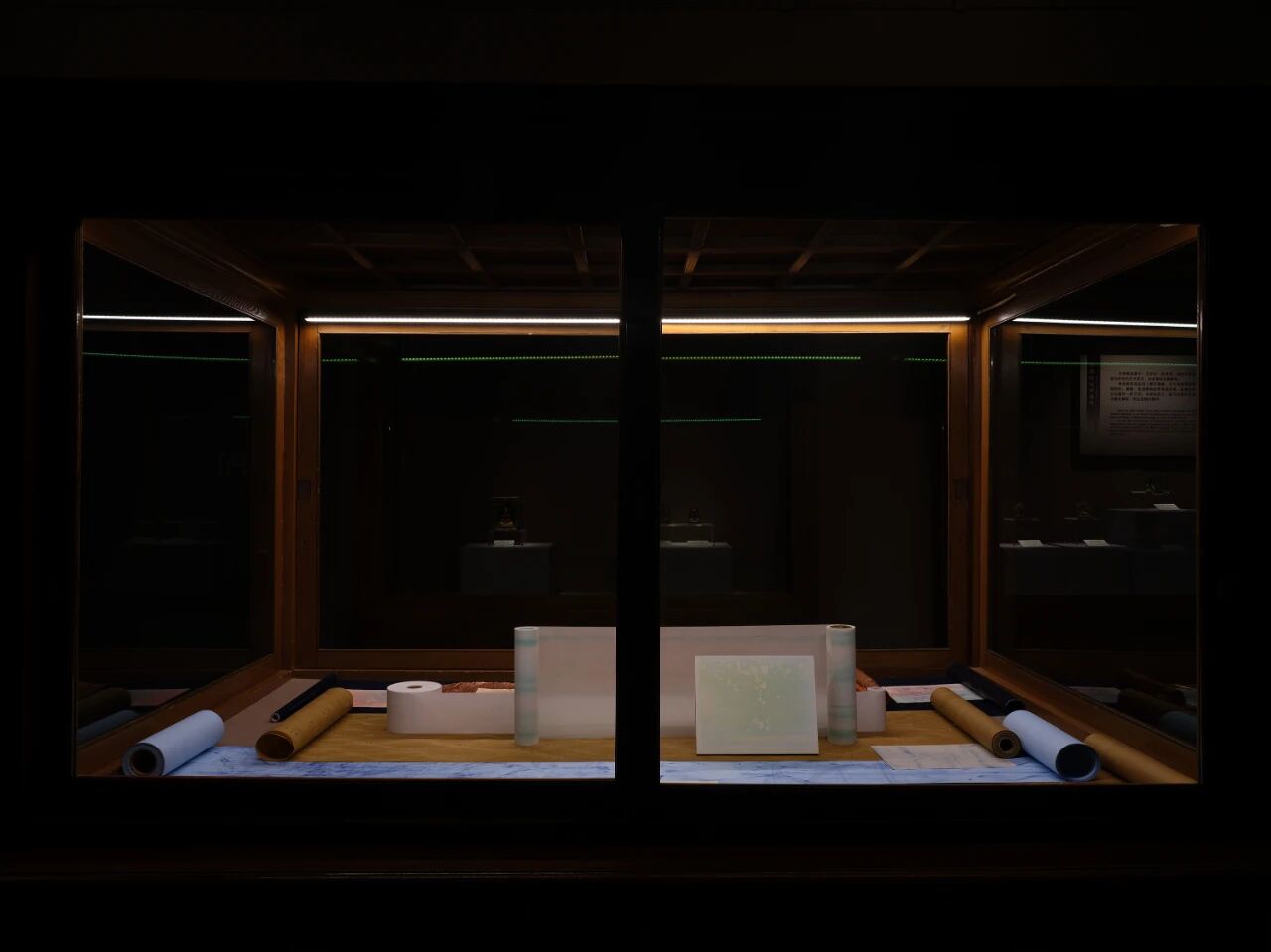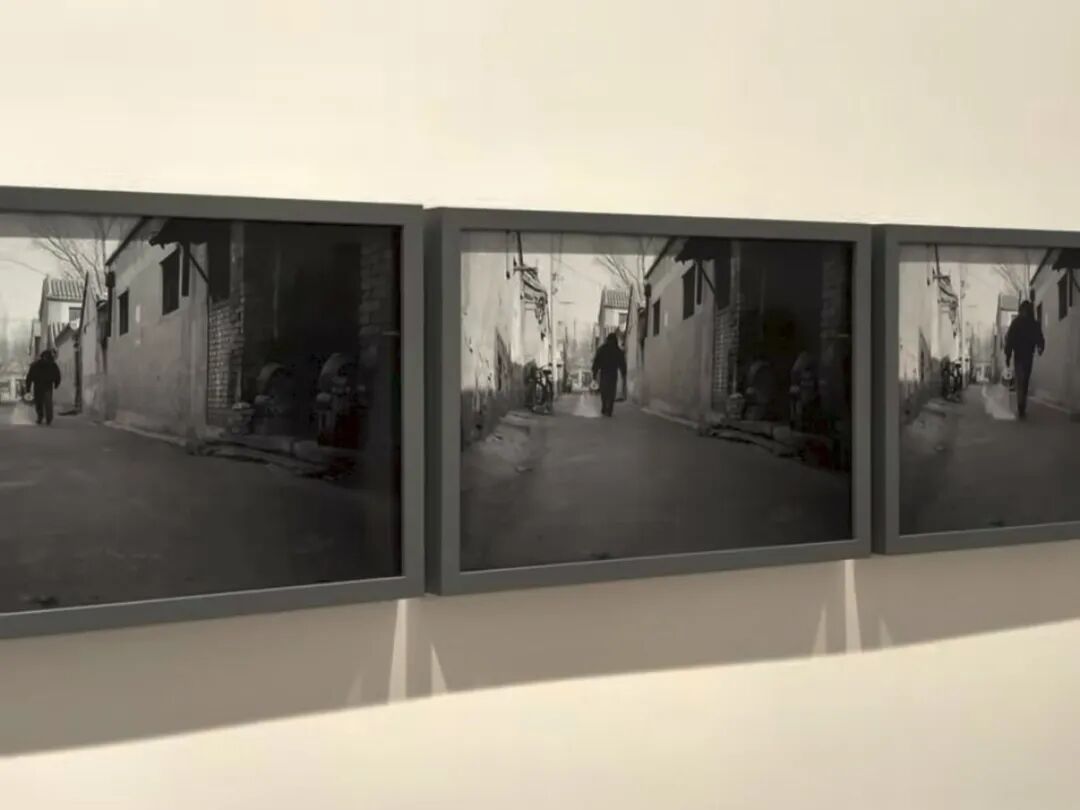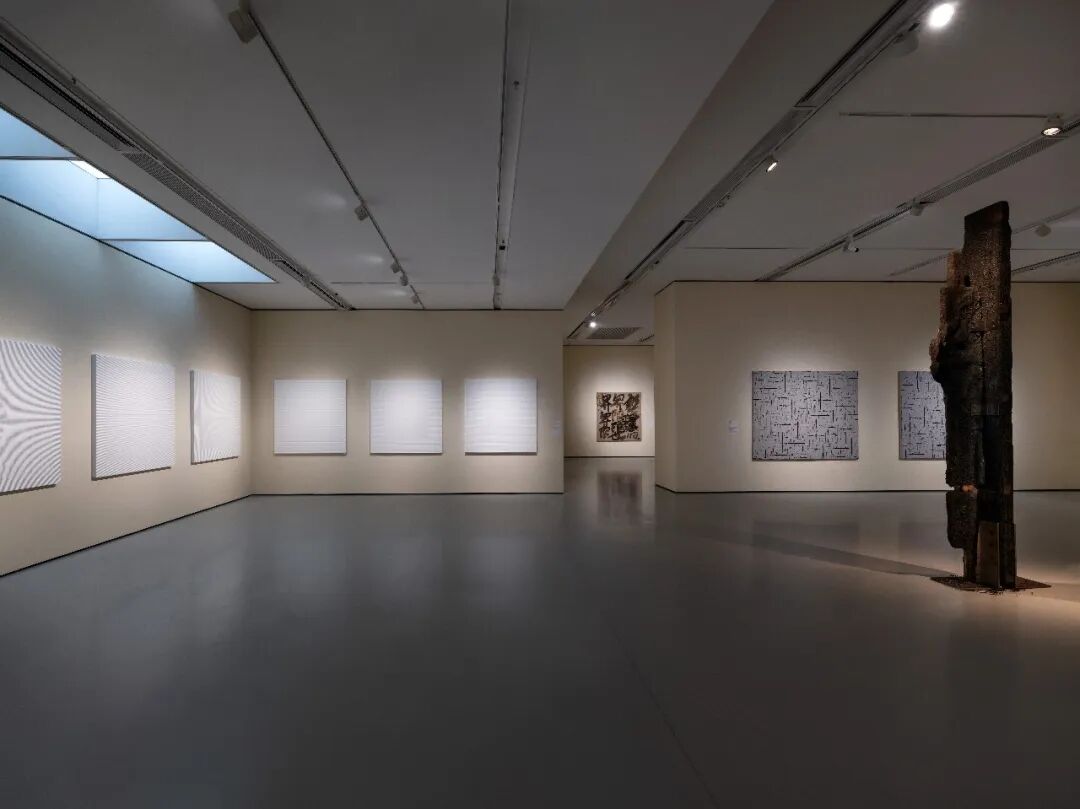
Liang Yuanwei’s work Blueprint — Sine and Direct Current is currently on view at the Lvshun Museum.
“In February of this year, Professor Shu Kewen invited me to participate in the project In Lvshun, an invitation that stemmed from certain directions in my recent solo project Five-Colored Earth that resonated with this initiative. In Lvshun brings together seven contemporary artists, integrating works across different media—video, installation, painting, and sound—into the museum’s collection of historical artifacts for public display. The first phase of the project opened in 2024, followed by a second phase in May 2025; the two phases combined will remain on view through October.
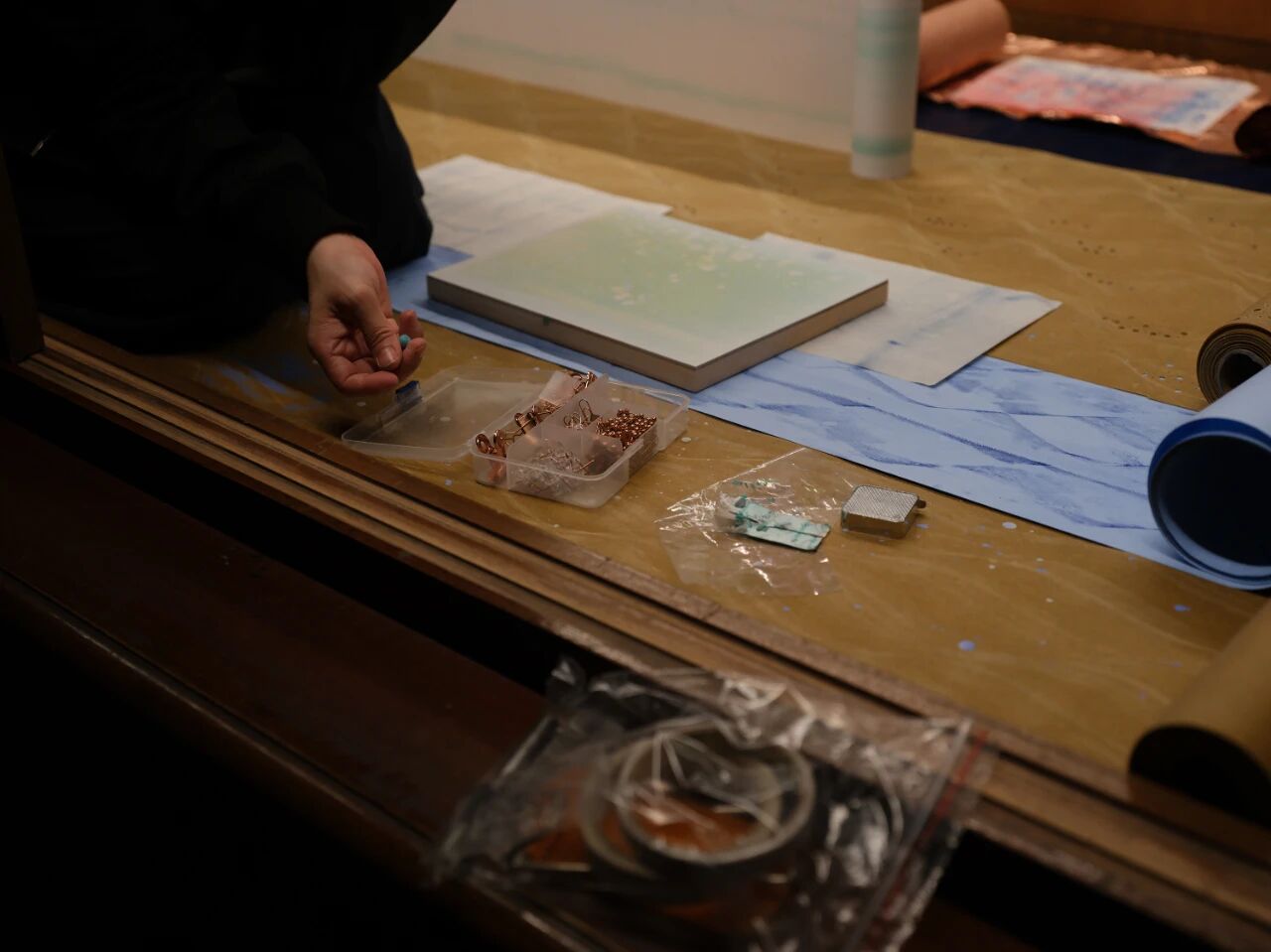
The Lvshun Museum is a national first-class museum located in Lüshunkou, on the Liaodong Peninsula. The gentle waves of the sea and the soft cherry blossoms seem to attempt to soothe this land, long permeated with a heavy historical past. The display case assigned to me within the project is itself an artifact. This large wooden and glass-inlaid case, situated at the center of the gallery, is finely crafted and meticulously constructed. Surrounded by Buddhist sculptures from successive dynasties, I bent down to enter the case and install my work, as if initiating a dialogue with forces that exceed the scope of individual life.
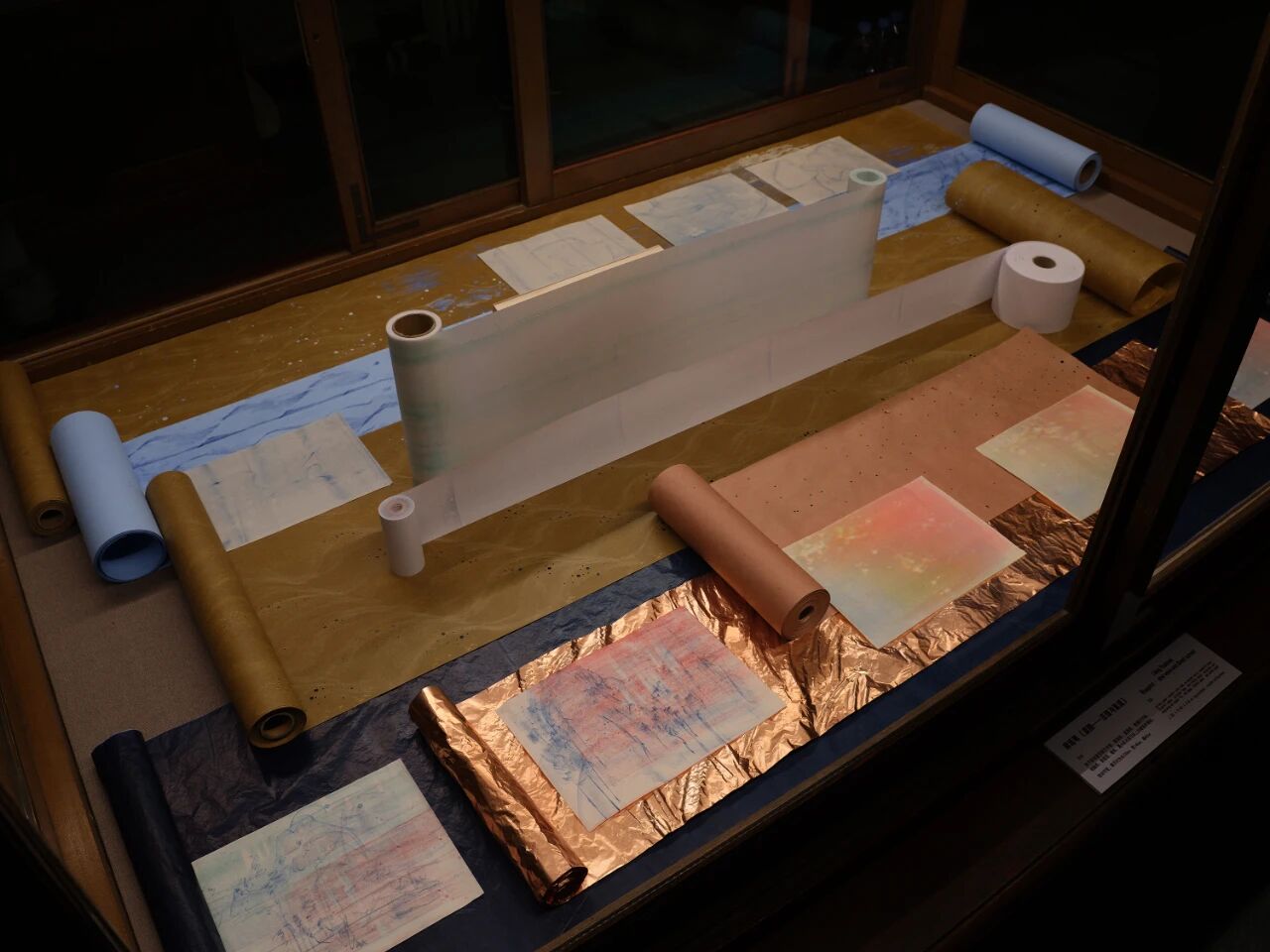
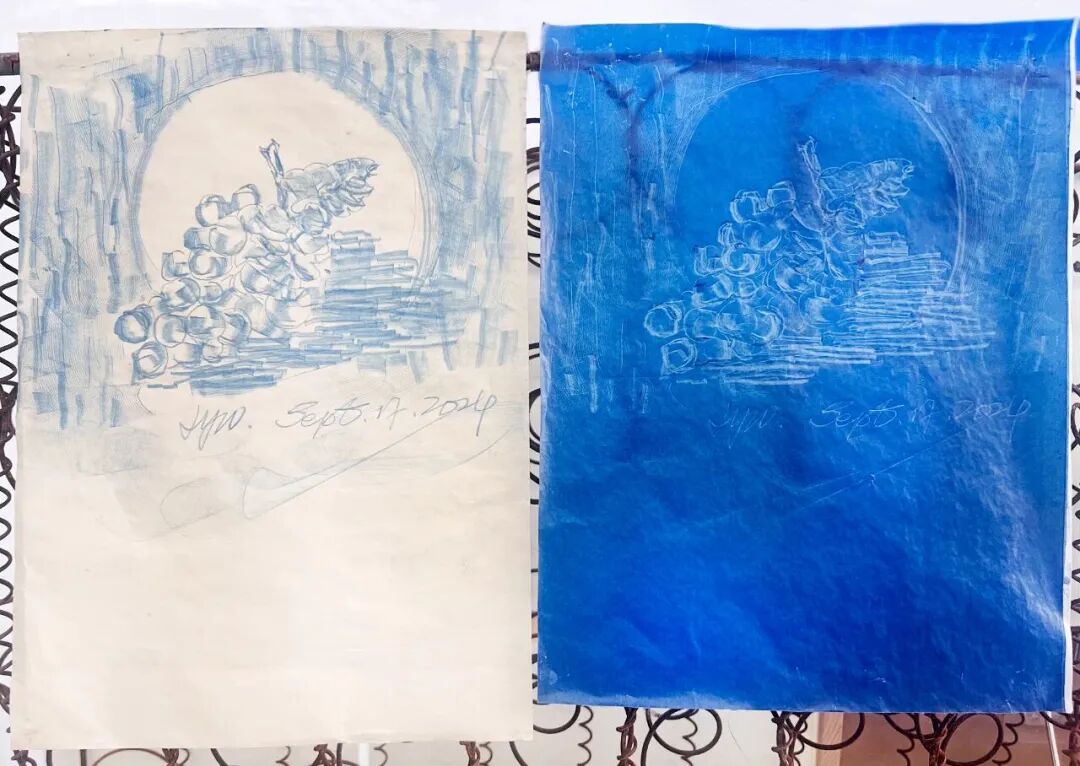
More than a century ago, these display cases and the museum’s eclectic-style building were remodeled by Japanese engineers recently returned from Europe, based on foundations originally designed and built by Tsarist Russia. After changing hands several times, they were returned to the newly founded People’s Republic of China by the former Soviet Union in the 1950s. Human discovery and construction always play different roles within different blueprints: copper is an excellent conductor of electricity and was often used to cast ritual vessels in early civilizations; wax is used to prevent components from rusting and was also a material for painting pharaohs’ portraits in ancient Egypt; and when I draw physical sine waves with a comb, I see Ma Yuan’s depictions of water.
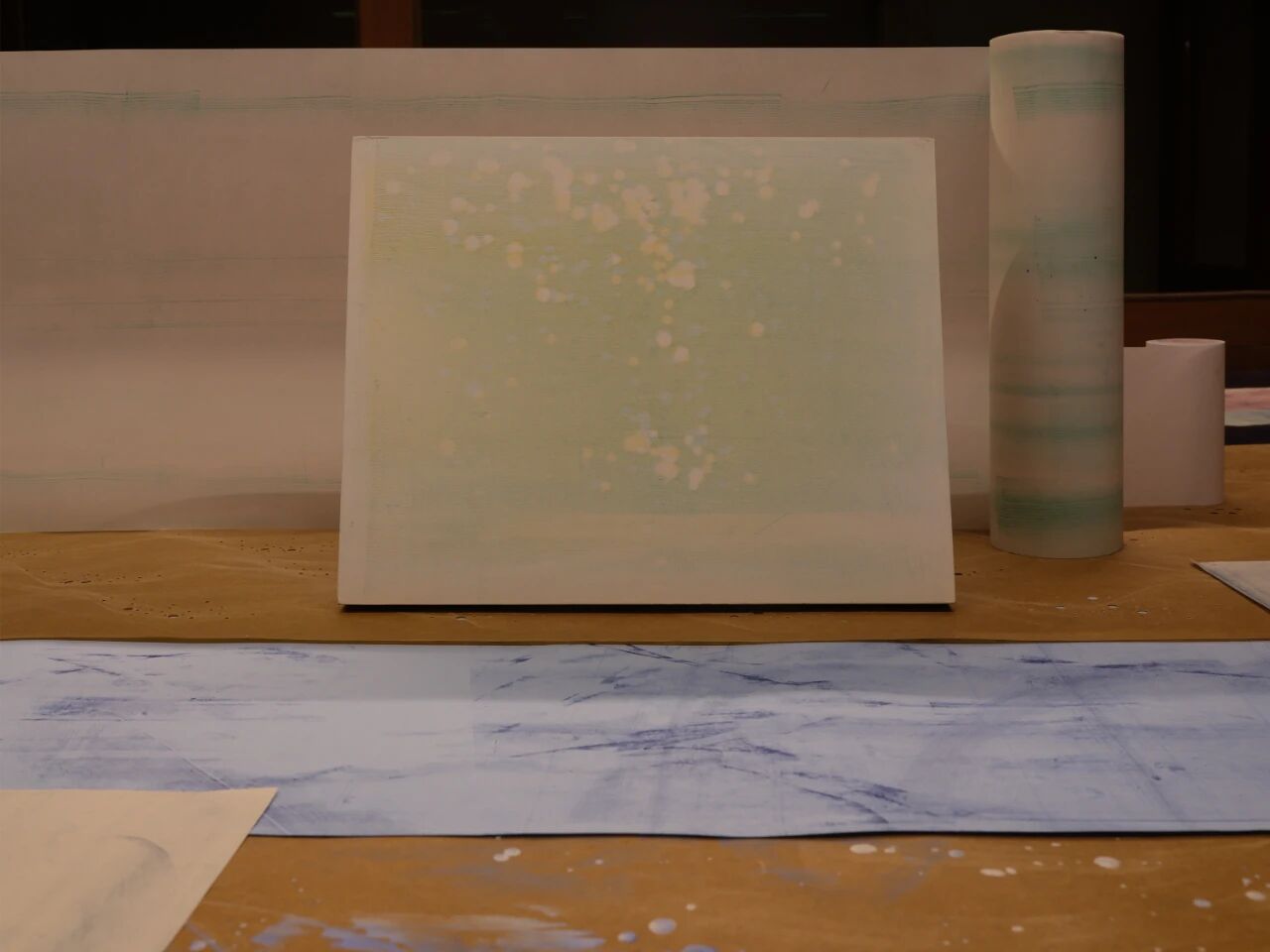
In this project, I used industrial materials and tools familiar to me since childhood to create “handscrolls.” Blueprint paper, tracing paper, wax paper, carbon paper, wax, copper foil, punches, round holes, straight or curved waveforms, the three primary colors of light… I often encountered these in my father’s laboratory in the 1980s and 1990s, when he worked as an electronic engineer. Before computers became widespread, engineers often had to be accomplished draftsmen and model-makers. When I began studying arts and crafts design, I naturally inherited my father’s tools.
In my youth, I learned to hand-draw book covers, product packaging, and logos with simple yet elegant forms and colors, achieving results comparable to printed matter—though in terms of complexity and precision, they could never match engineering blueprints. Upon his retirement, my father burned those blueprints, which were themselves akin to abstract paintings. As time moves relentlessly forward, many people never have the chance to turn blueprints into reality. And when blueprints are realized, does that necessarily mean the fulfillment of a vision?
This has been my long-standing question, and it is also the subject I am currently working on.”
Liang Yuanwei
May 2025