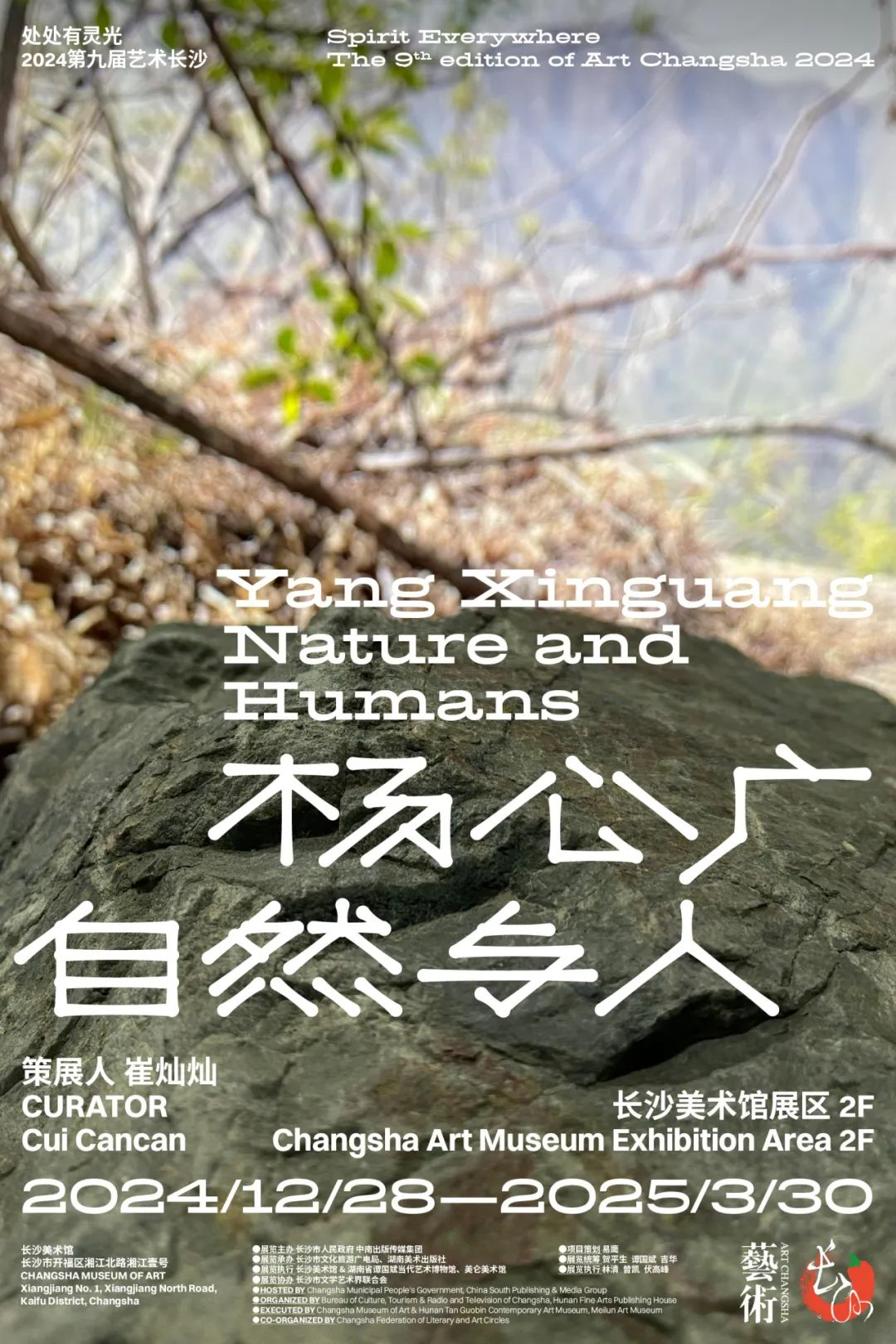
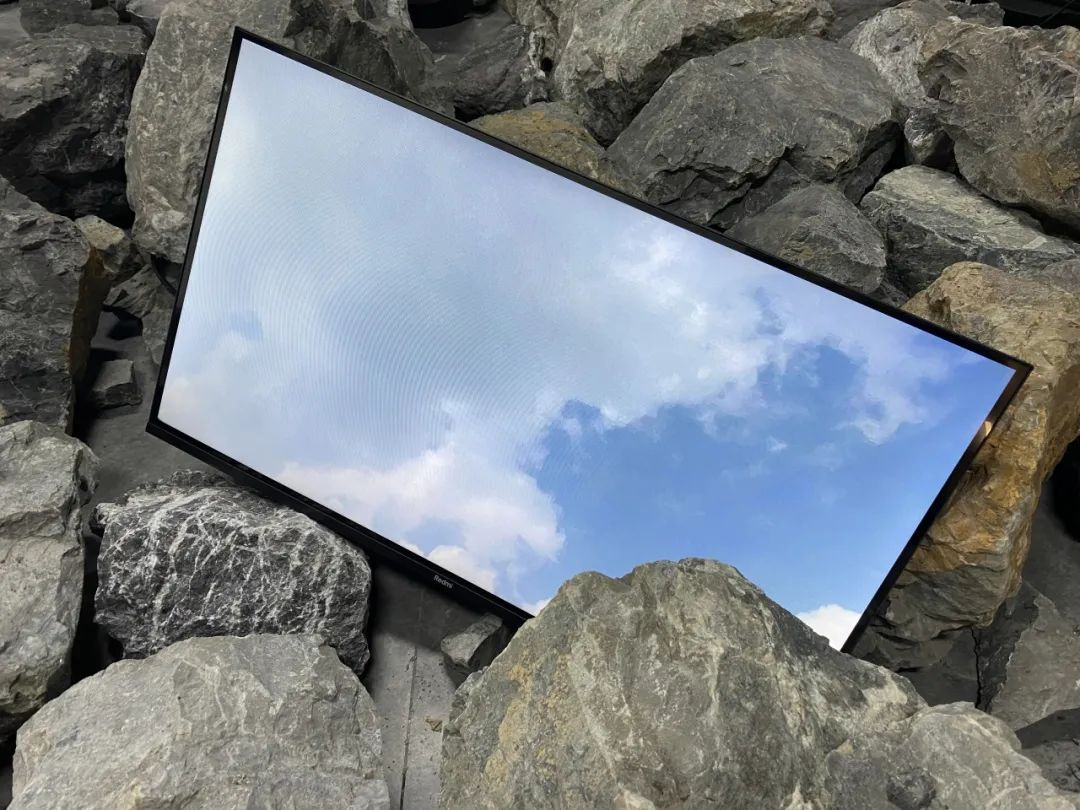
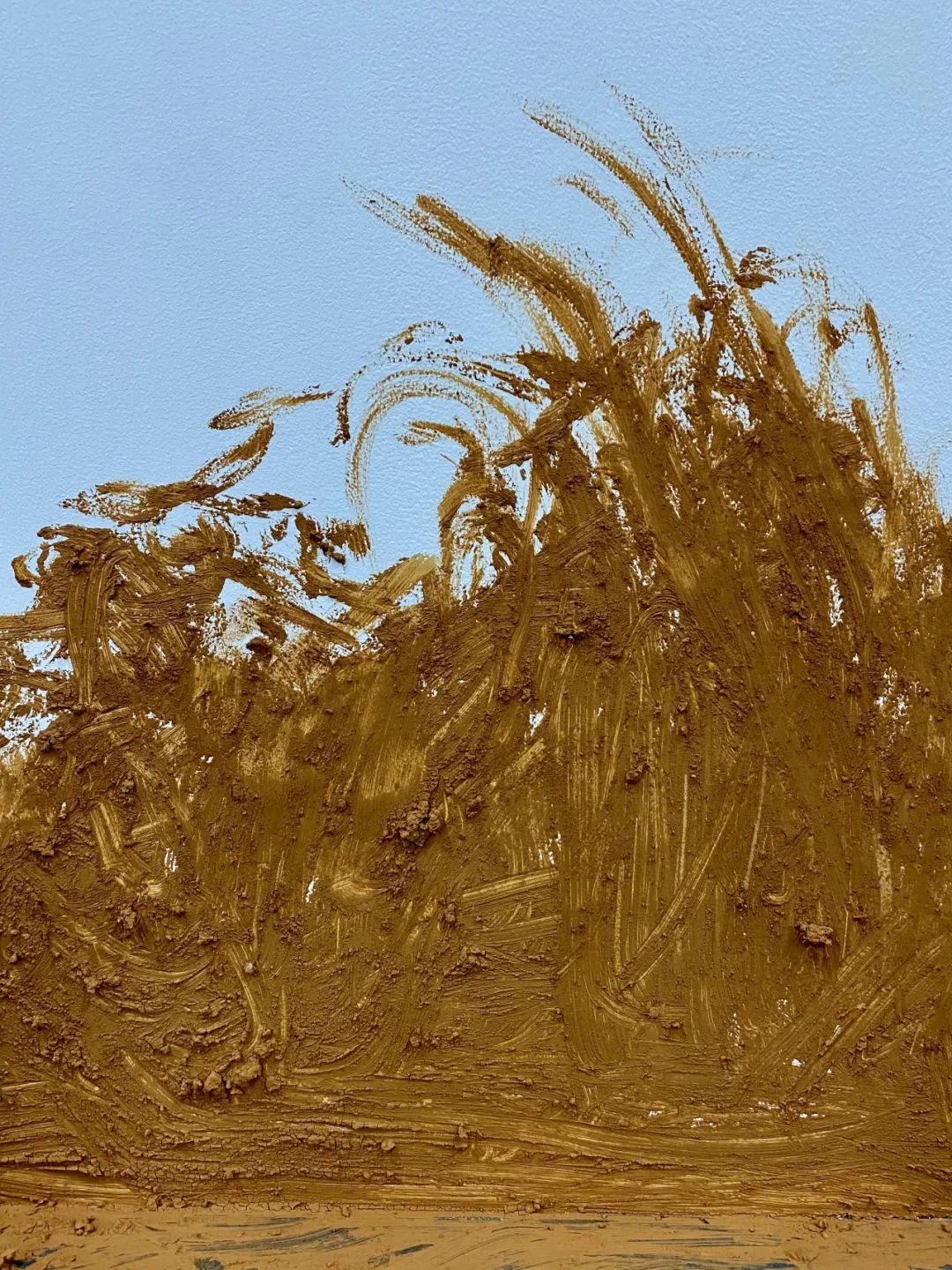
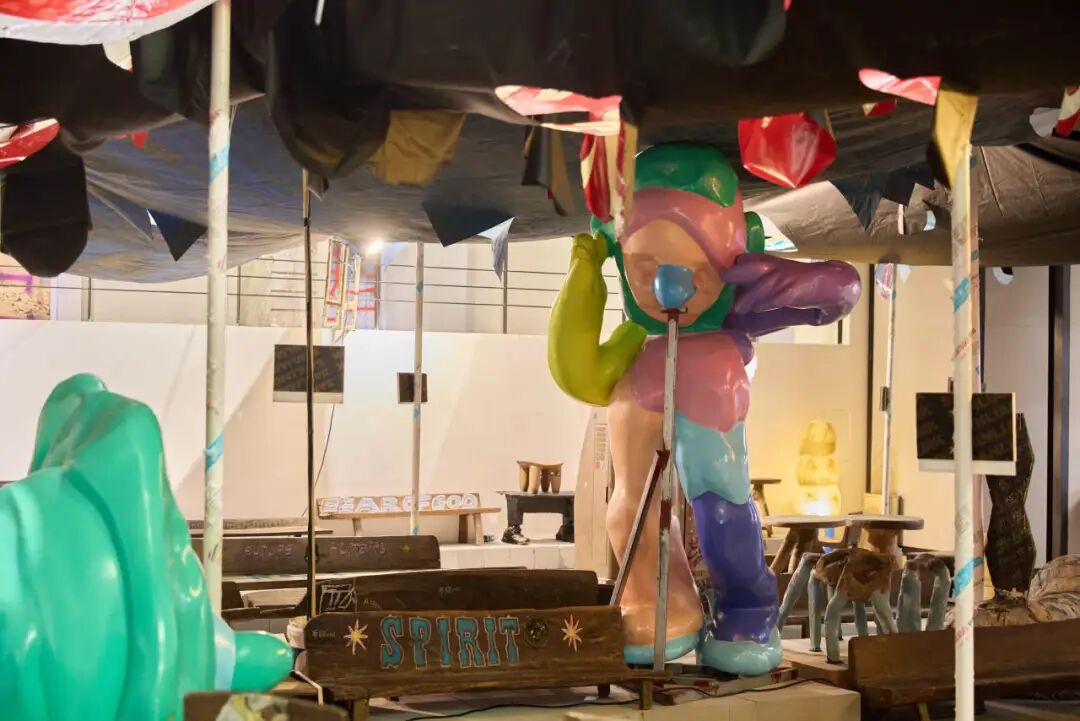
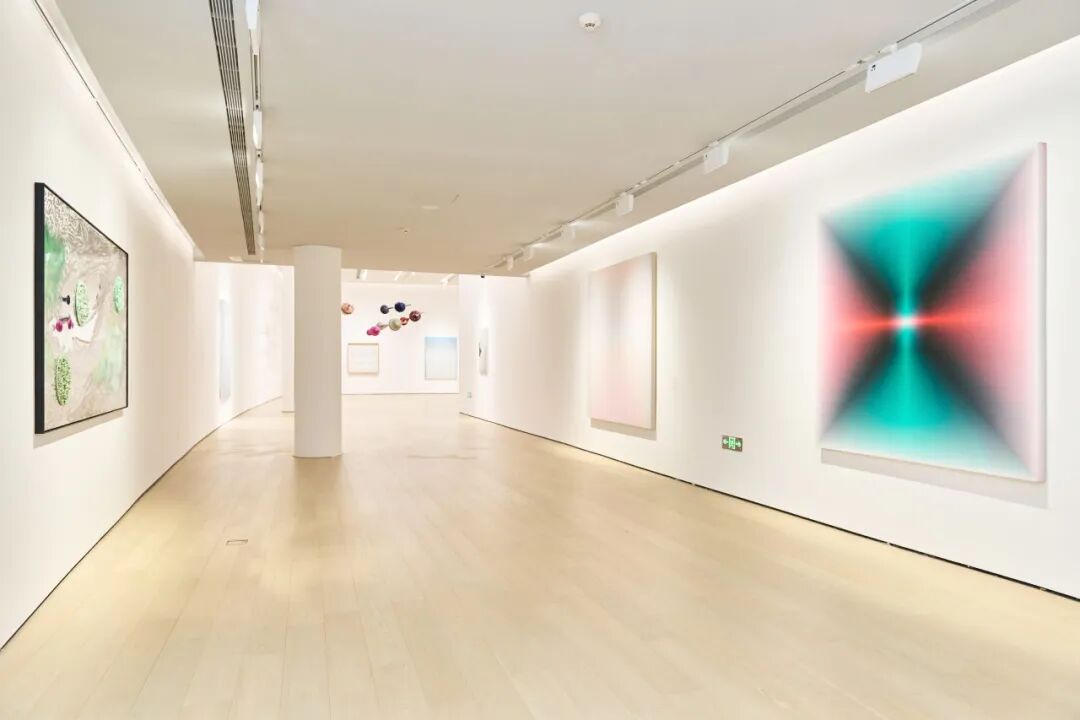
Yang Xinguang lives on the outskirts of the city, where he maintains an intimate relationship with his surroundings. Much of his work reads as a natural chronicle of the outskirts—the mountains and fields, the grasses, trees, mud, and stones—depicting the dramatic struggles of nature that unfold on the periphery: morning glories, green bristlegrass, and dandelions, driven by the changing seasons, wildly grow and decay across each other's territories. This tug-of-war occurs not only among plants but also between vegetation and the makeshift structures and industrial materials ubiquitous to peri-urban landscapes. When a house is abandoned, for instance, it becomes a haven for weeds—vines entangle the barbed wire, and grasses push through aluminum-plastic panels. These reciprocal dynamics of encroachment and entanglement between the natural and the man-made coexist symbiotically in Yang's works, giving rise to the artist's distinctive aesthetic of hybridity and raw, untamed vitality within the exhibition.